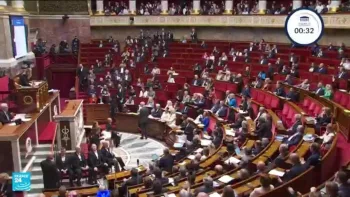
France Passes Emergency Law to Avoid Fiscal Vacuum in 2026

French lawmakers passed an emergency law to ensure the continuity of state operations until next January, amid stalled efforts to reach consensus in a deeply divided parliament over the 2026 budget.
The law was approved after the National Assembly and the Senate failed to agree on a unified budget text due to sharp disagreements over spending cuts and tax increases, prompting Prime Minister Sébastien Lecornu’s government to act swiftly to avoid financial and administrative paralysis at the start of the new year.
The temporary legislation extends current spending rules and grants the government additional time to complete negotiations and adopt a full budget, while maintaining tax collection and meeting financial obligations.
The move comes as France faces growing scrutiny from markets and credit rating agencies due to elevated deficit levels, heightening investor sensitivity to any delay in fiscal consolidation.
The law was approved after the National Assembly and the Senate failed to agree on a unified budget text due to sharp disagreements over spending cuts and tax increases, prompting Prime Minister Sébastien Lecornu’s government to act swiftly to avoid financial and administrative paralysis at the start of the new year.
The temporary legislation extends current spending rules and grants the government additional time to complete negotiations and adopt a full budget, while maintaining tax collection and meeting financial obligations.
The move comes as France faces growing scrutiny from markets and credit rating agencies due to elevated deficit levels, heightening investor sensitivity to any delay in fiscal consolidation.