France Moves Toward Emergency Law to Keep State Running Until 2026 Budget

The French government plans to push for the adoption of an emergency law to ensure the continuity of state operations until January, after failing to reach an agreement on the 2026 budget.
This temporary step aims to avoid financial and administrative paralysis in one of the eurozone’s largest economies.
Government spokesperson Maud Bregeon said the special legislation is intended to provide additional time for final negotiations, stressing that its main objective is to maintain public spending, tax collection, and the government’s ability to borrow during the transitional period.
A joint parliamentary committee failed to agree on a full 2026 budget, prompting Prime Minister Sébastien Lecornu’s government to resort to this interim measure, which allows current spending rules to be extended into the beginning of next year.
President Emmanuel Macron emphasized that the emergency law does not constitute an actual budget, underlining the need to pass a complete budget as quickly as possible once January begins.
The move comes amid growing scrutiny from investors and credit rating agencies, as France has recorded the highest budget deficit in the eurozone, heightening market sensitivity to any delay in fiscal consolidation.
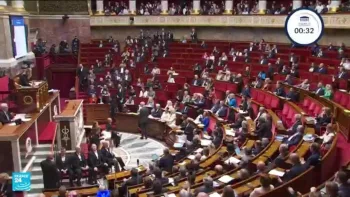
Parliament is expected to vote on the emergency legislation during Tuesday’s session, giving the government more time to reopen negotiations on the 2026 budget.
This temporary step aims to avoid financial and administrative paralysis in one of the eurozone’s largest economies.
Government spokesperson Maud Bregeon said the special legislation is intended to provide additional time for final negotiations, stressing that its main objective is to maintain public spending, tax collection, and the government’s ability to borrow during the transitional period.
A joint parliamentary committee failed to agree on a full 2026 budget, prompting Prime Minister Sébastien Lecornu’s government to resort to this interim measure, which allows current spending rules to be extended into the beginning of next year.
President Emmanuel Macron emphasized that the emergency law does not constitute an actual budget, underlining the need to pass a complete budget as quickly as possible once January begins.
The move comes amid growing scrutiny from investors and credit rating agencies, as France has recorded the highest budget deficit in the eurozone, heightening market sensitivity to any delay in fiscal consolidation.
Parliament is expected to vote on the emergency legislation during Tuesday’s session, giving the government more time to reopen negotiations on the 2026 budget.